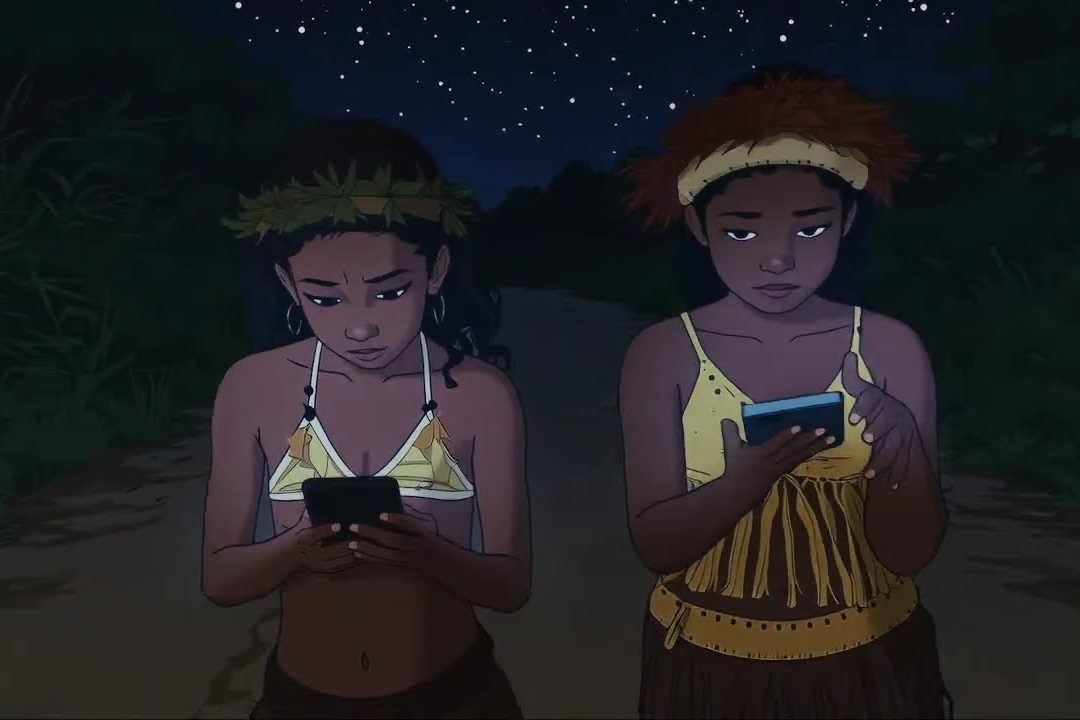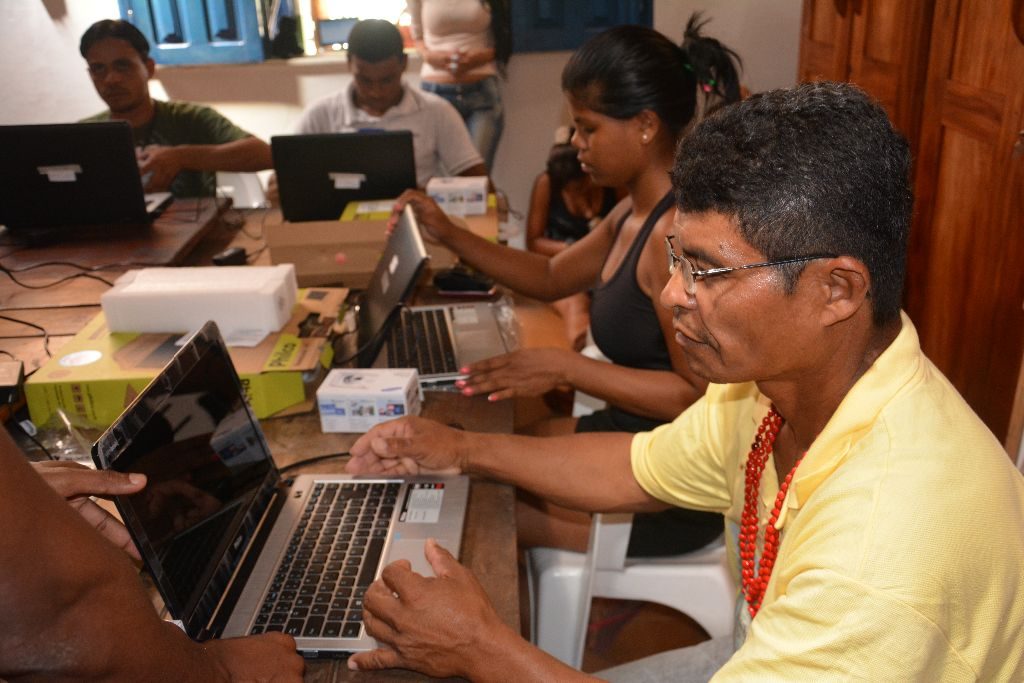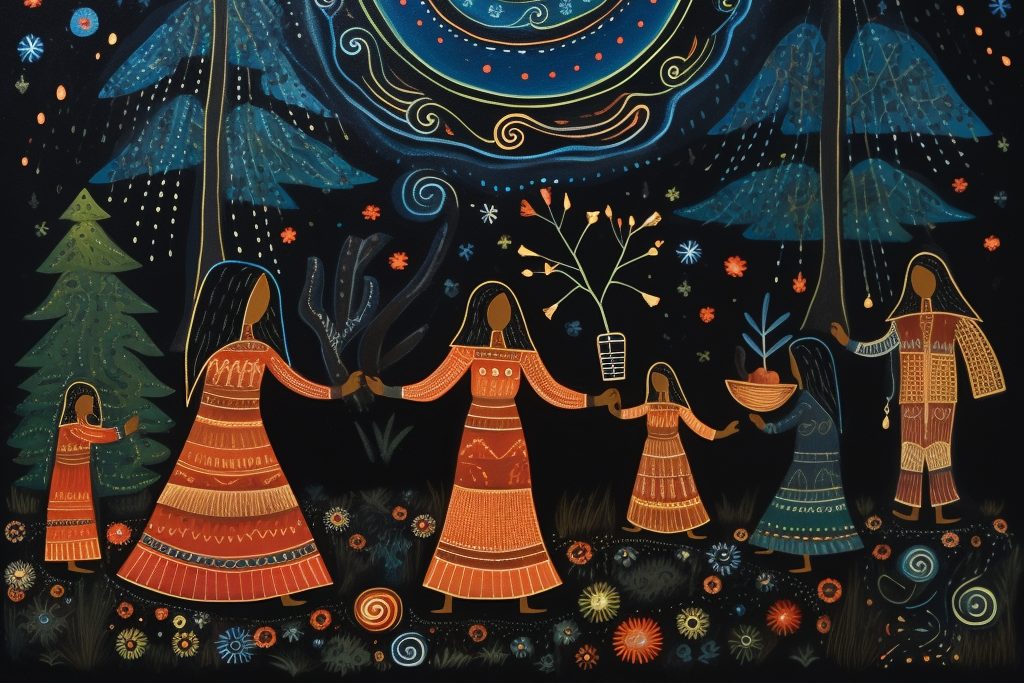
A arte feita com programas de inteligência artificial divide opiniões: há quem se assuste com o que essas ferramentas fazem e quem veja nelas muito potencial. Mas elas só são tão boas quanto as pessoas que as projetam e as imagens com que são treinadas, e é aí que o preconceito pode entrar. O projeto IA/AI investiga como essas ferramentas representam os povos e as culturas indígenas e como os próprios indígenas podem usá-las a seu favor.
Fase 1 (2023): o que o MidJourney vê
Em 2023 o projeto testou o MidJourney em grupos focais online com 17 participantes indígenas — artistas, escritores, pensadores e lideranças de diversos povos do Brasil e da América do Sul. Cada participante imaginou uma cena da vida da sua comunidade em 2050 e escreveu o “prompt” (a descrição da imagem). As imagens geradas foram discutidas desde uma perspectiva indígena.
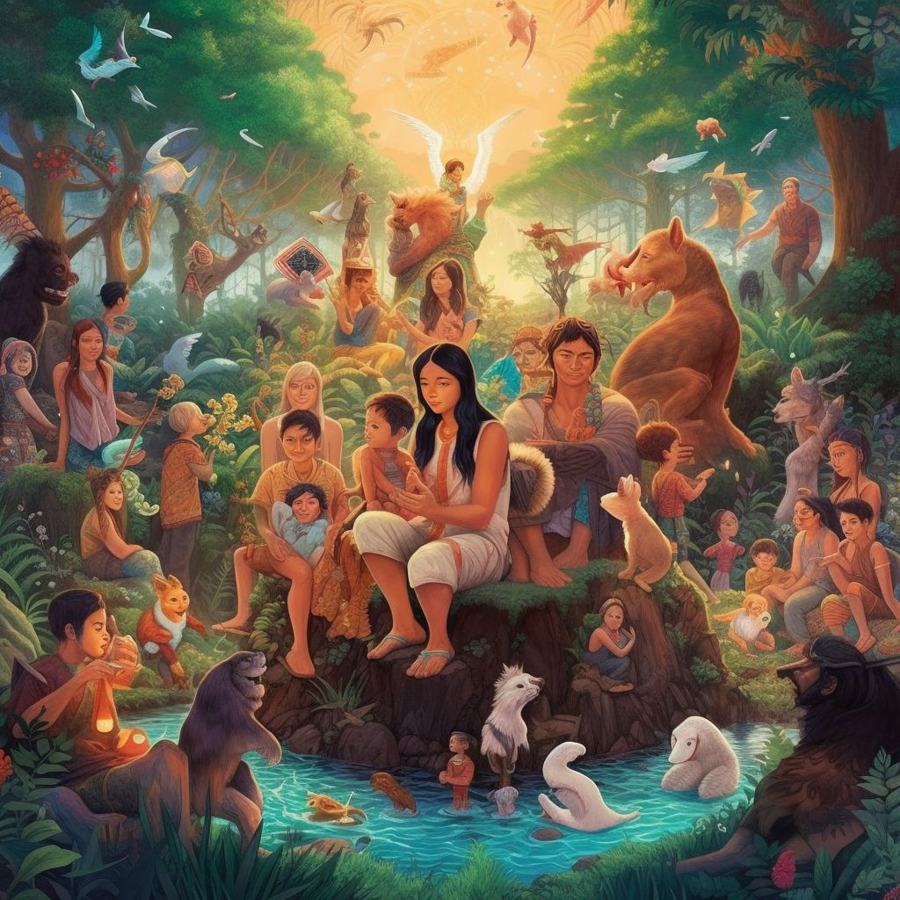
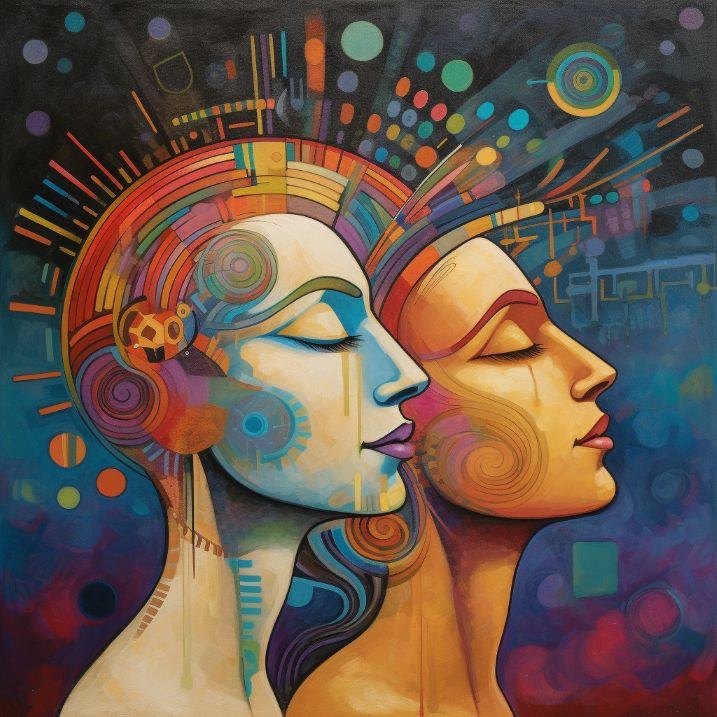
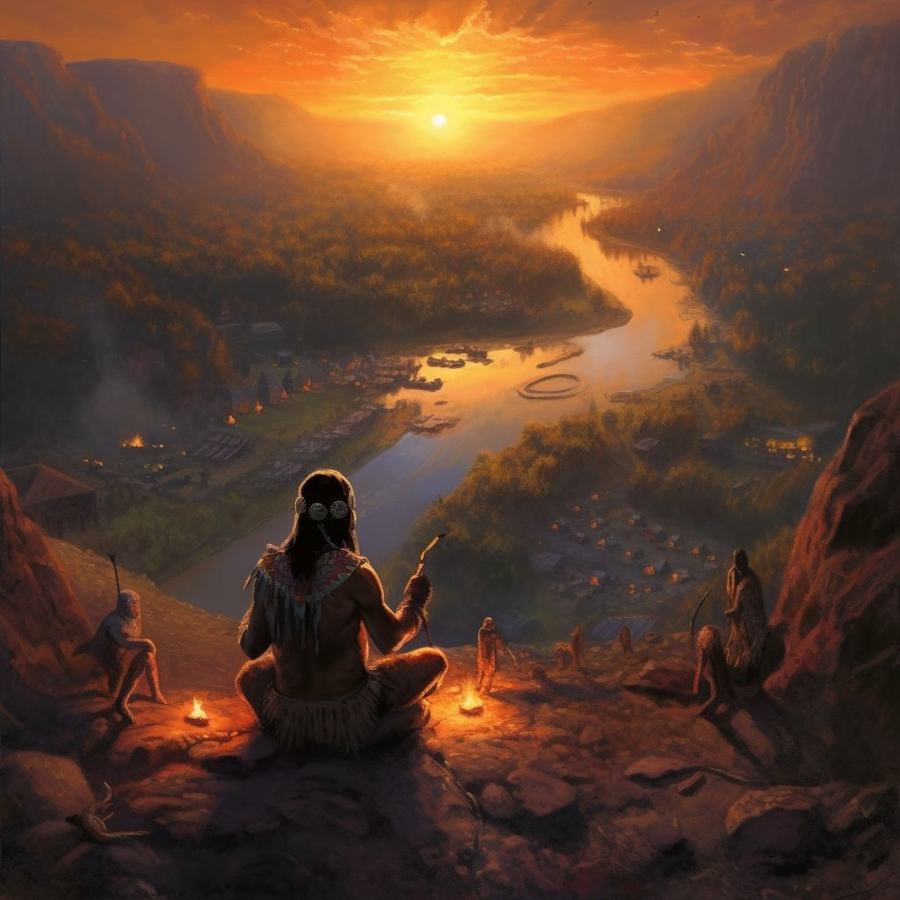
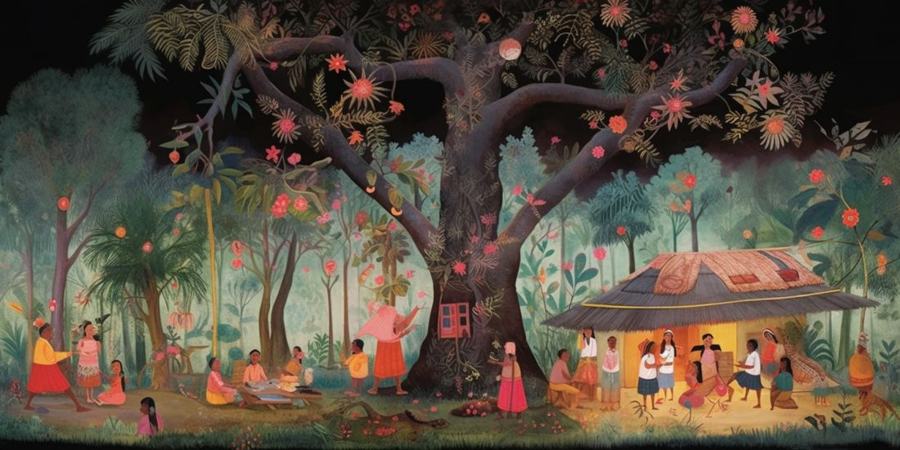
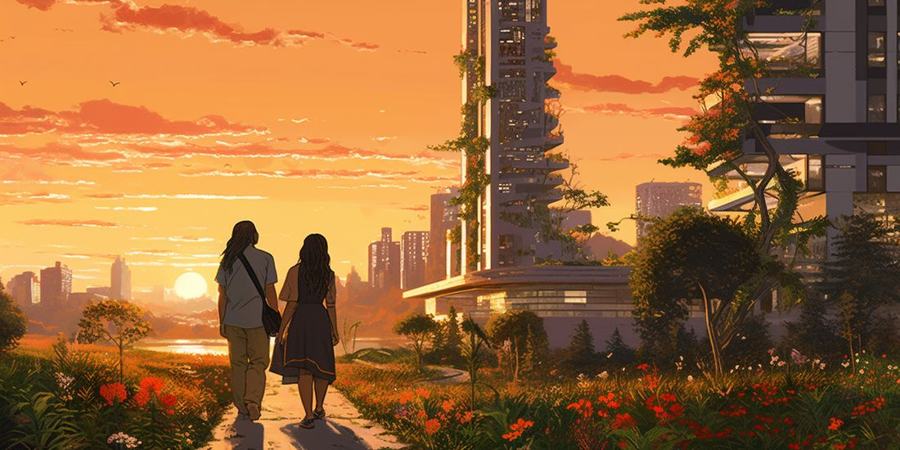
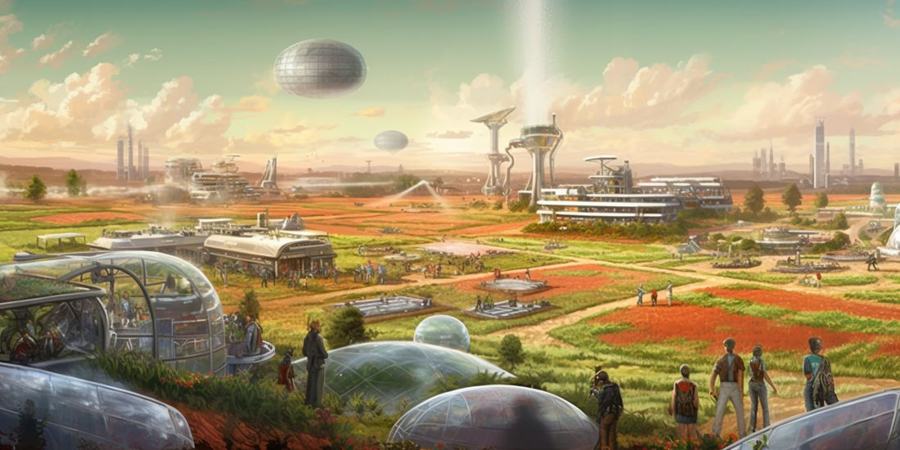
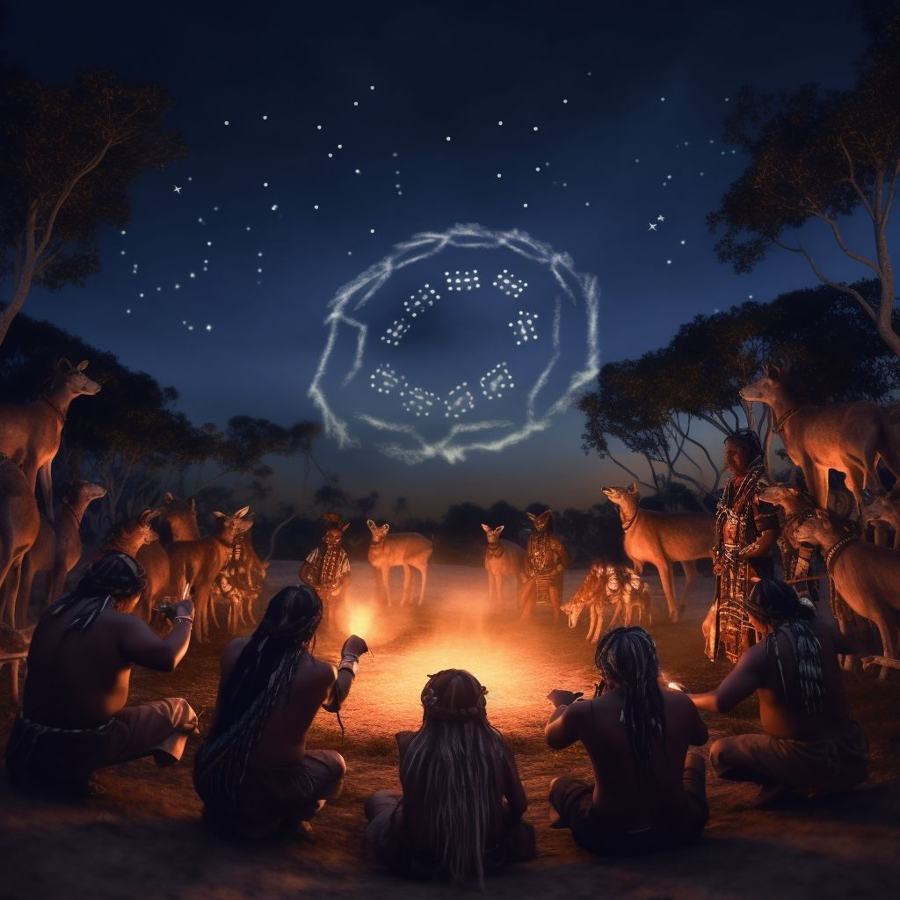
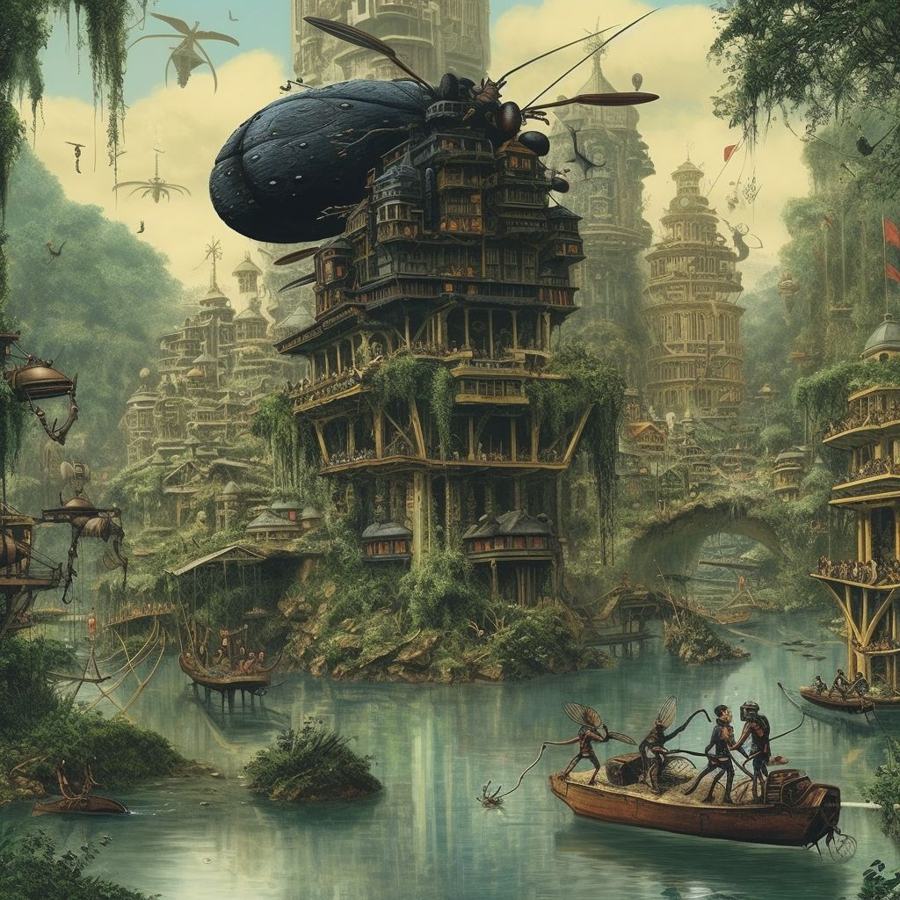
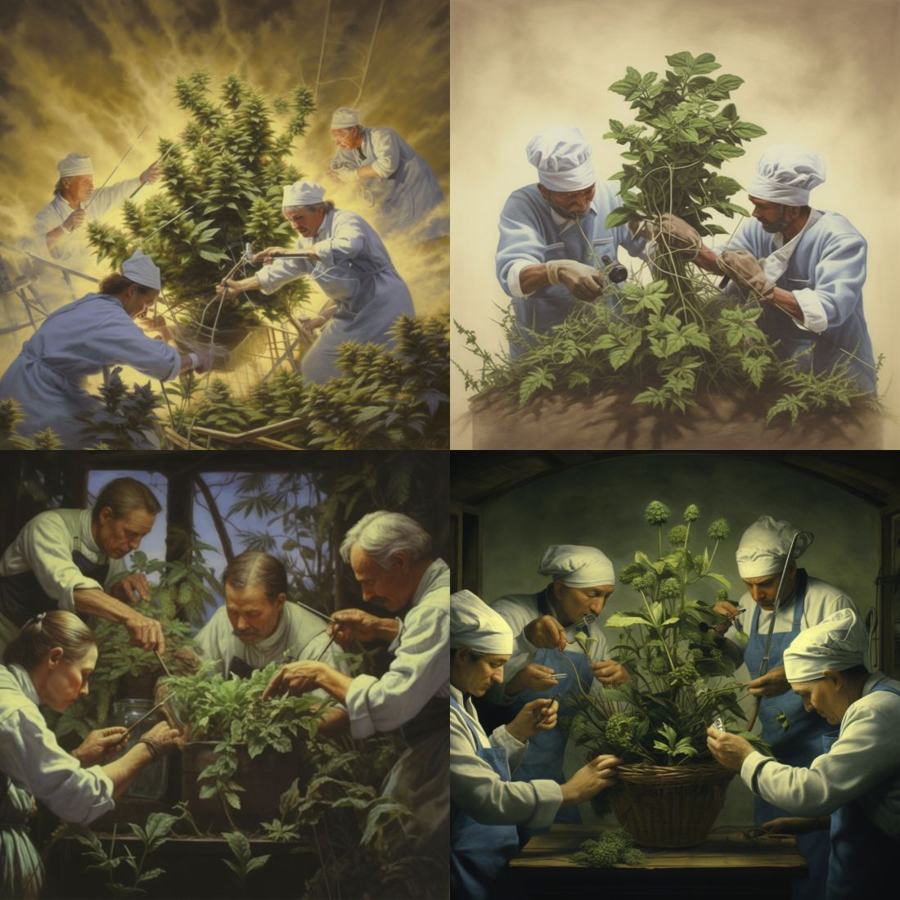
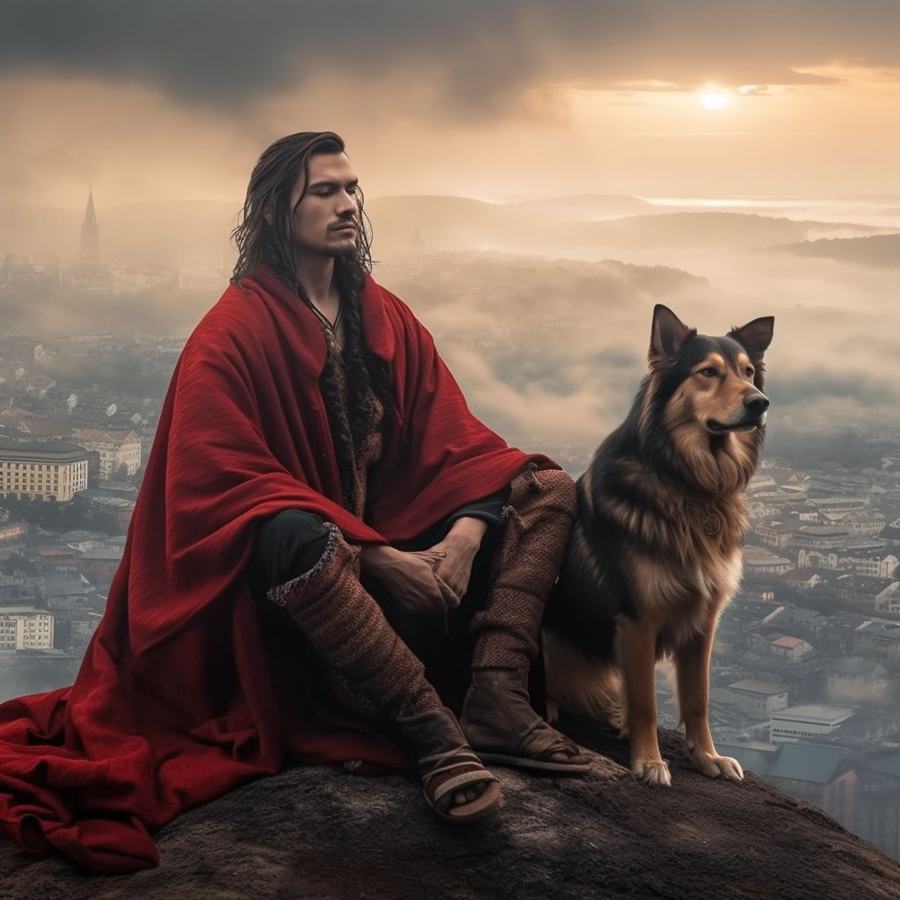
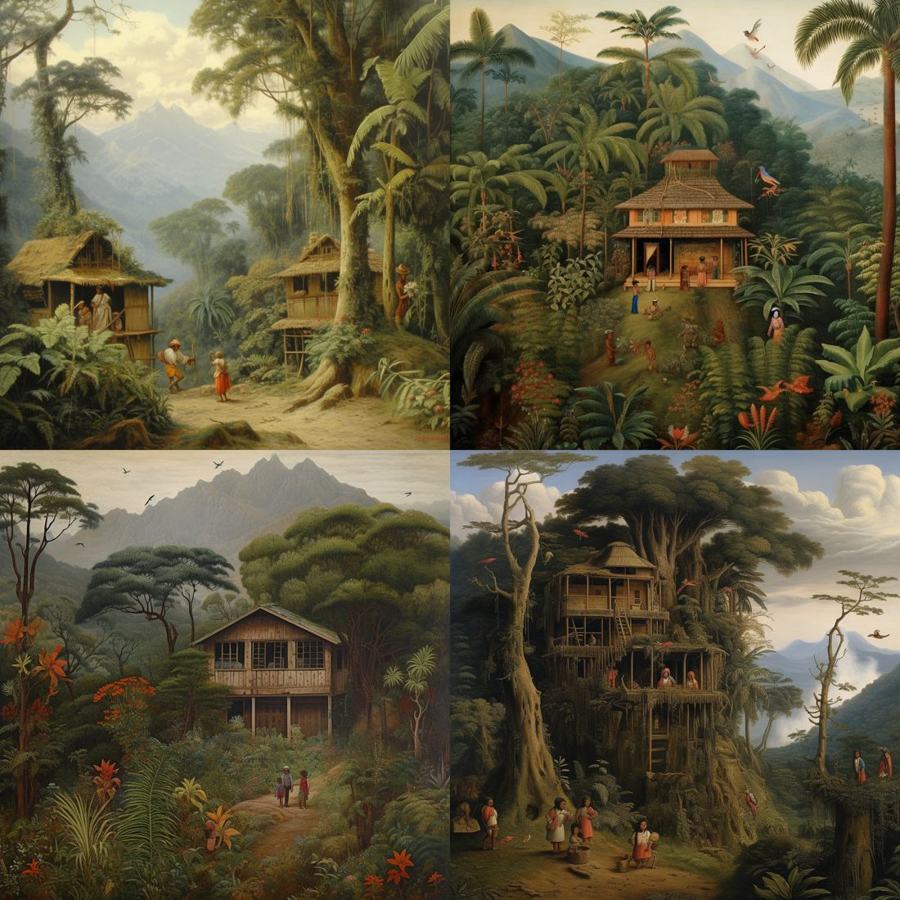
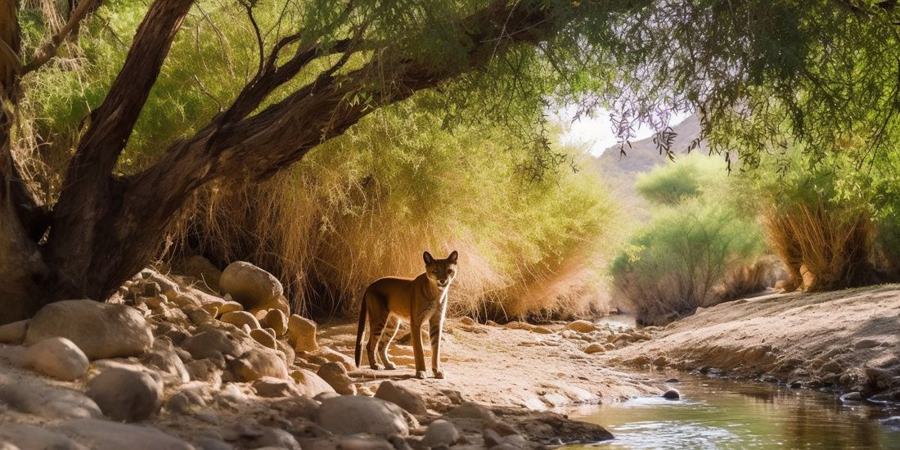
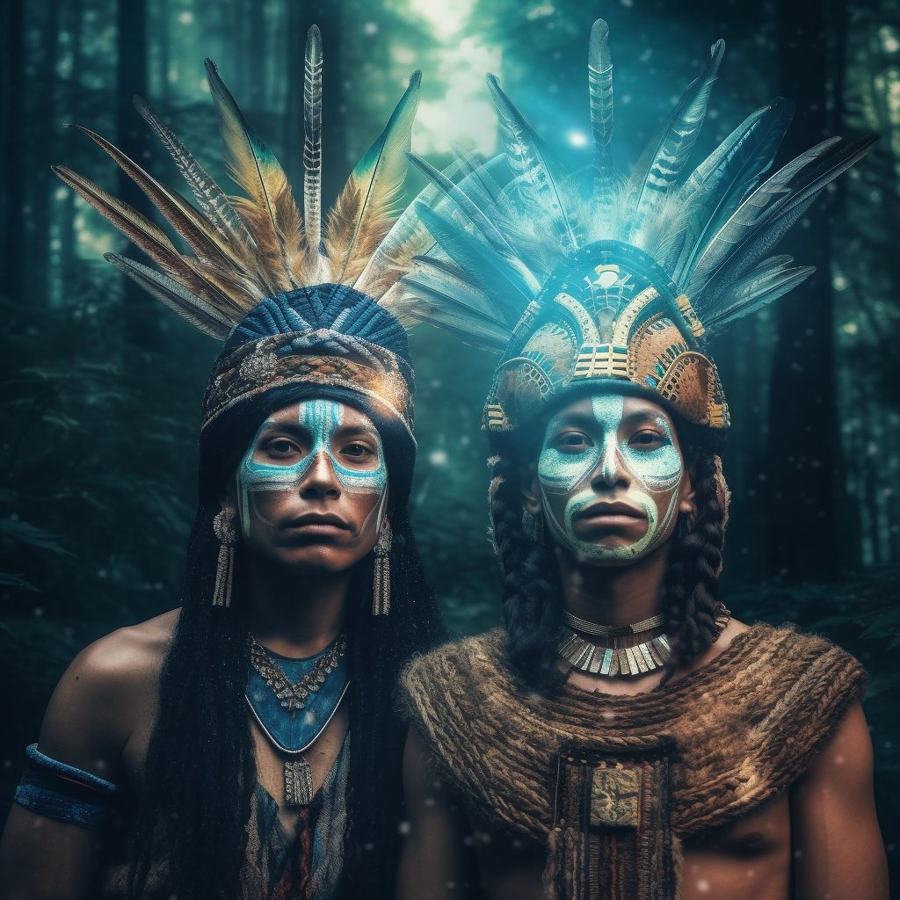
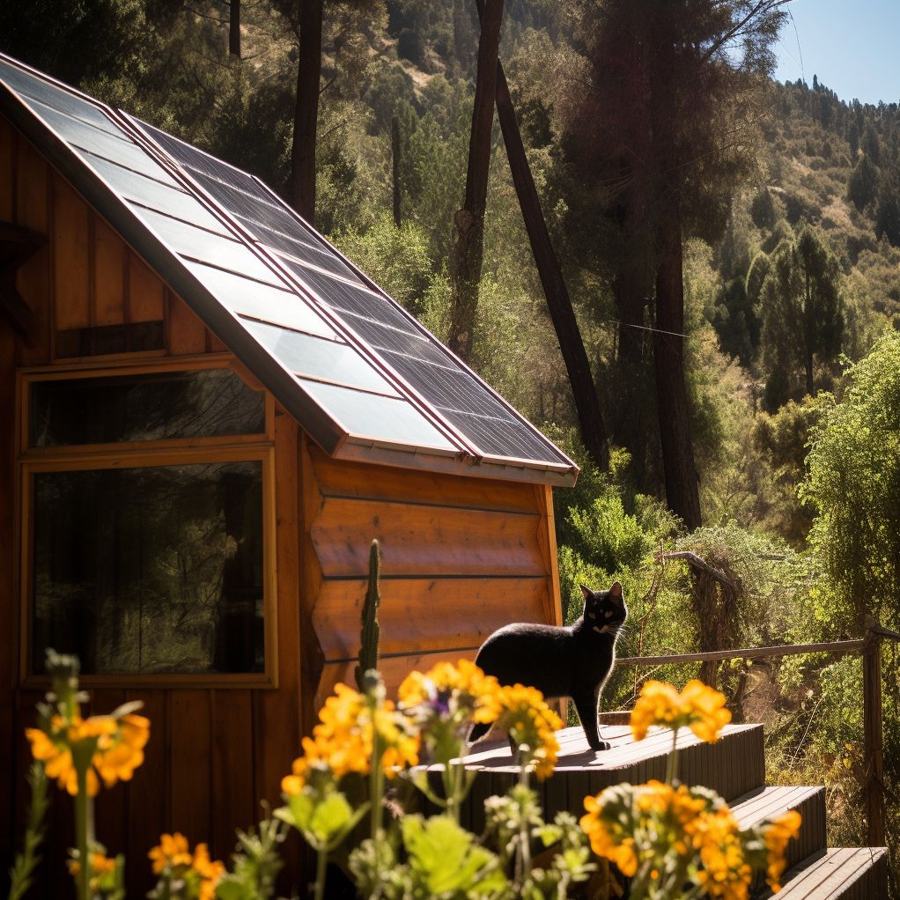
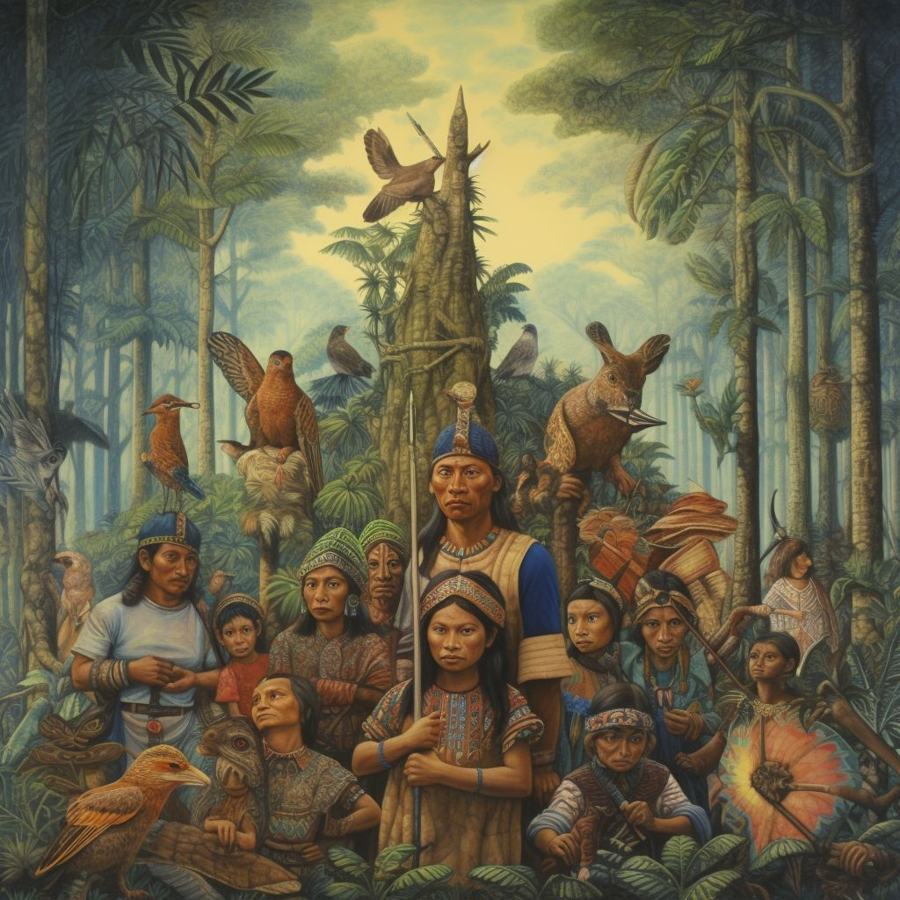
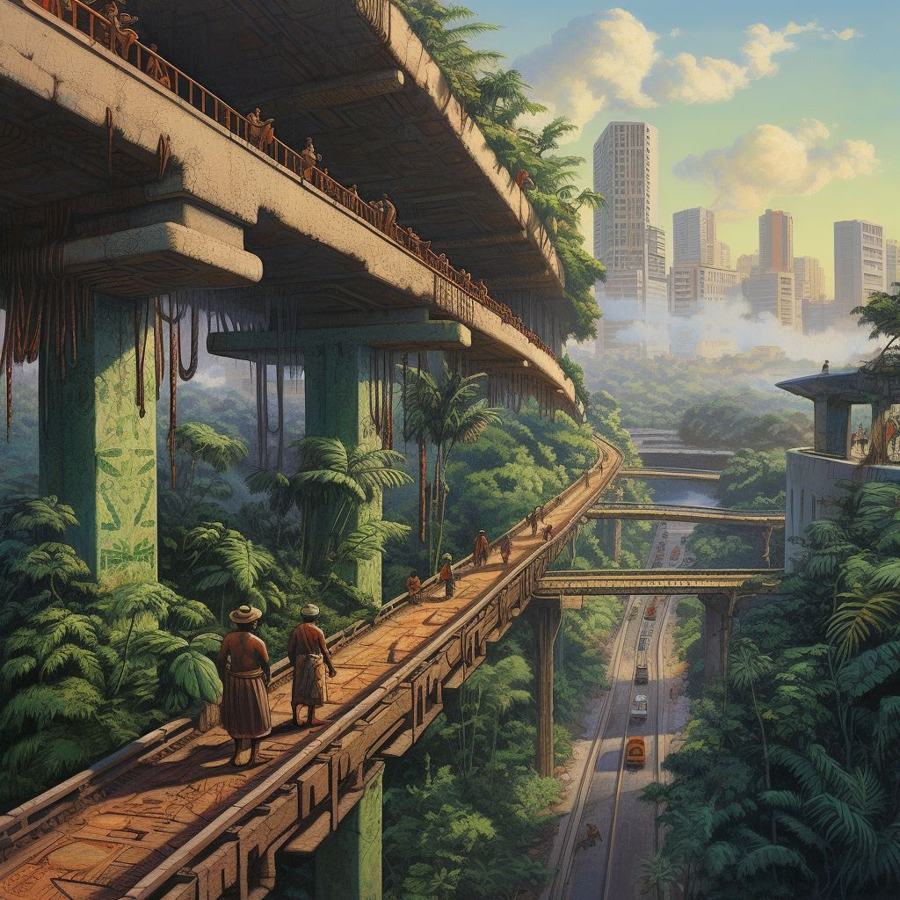
Os resultados mostraram vieses claros. Sem a palavra “indígena”, um povo ou uma região no prompt, a ferramenta devolvia corpos brancos, paisagens europeias ou norte-americanas e uma estética de pintura europeia ou de mangá. Com “indígena”, as imagens prendiam os povos à tradição e apagavam celulares, satélites e outras tecnologias. Muitos participantes não se reconheceram: “Esses não são meus parentes!”, disse Tadeu Kaingang ao tentar gerar imagens do seu povo. Loreto Millalén achou os resultados “muito brancos”, patriarcais e individualistas.
“Tenho convicção que existe uma boa parceria entre Inteligência Natural e Inteligência Artificial.” — Nhenety Kariri-Xocó
Os prompts
Os prompts ficaram no idioma em que foram usados; a maioria foi traduzida para o inglês, a língua em que a ferramenta foi treinada.
- Hangorroy Ymboré: Sunrise. A small mountain with an indigenous village at the bottom with a shaman kneeling in front of a small fire that emanates smoke that creates the face of an ancient spirit. The shaman is looking upwards towards the smoke. At the bottom there is a river, with indigenous people gathered to hear from the shaman.
- Haylly Zamora (Wichi e Kari’ña): A scene with trees including a mango tree, a white silk floss tree, a pink quebracho tree, a kapok tree with red flowers. In a clearing in the midlle there is a circular wooden house. In the foreground, an indigenous grandfather and grandmother sitting outside at night, telling stories to 5 children of different ages, with colorful clothes. In the night sky there are stars and a small satellite. In the trees there are owls, toucans, cardinals. At the foot of the trees there is a Chaco fox, 3 capybaras, an alligator, a ñandú, an anteater and a Southern tamandua. To one side of the children there are 5 indigenous adults watching the small screen of a cell phone. –ar 2:1
- Hemerson Pataxó Hãhãhãe: Long shot, eye level, side view, an Indigenous man from Amazonia, a Nordic woman and a Chinese woman walk together smiling. Around them: Urban landscape with skyscrapers covered by vertical gardens, many plants and flowers grow in harmony with modern architecture. The sunset reflects. –ar 2:1.
- Horacio Montes de Oca Ayala: A community working in the fields, a very wide space like a meadow. Lots of different kinds of crops. Lots of people working. But also a technological environment with robots, flying collective cars. Some cities visible in the distance. A sky half orange, half red. –aspect 2:1 –v 5.1
- Kadu Tapuya: Futuristic style, 16:9; Pernambuco, Brazil, 2050, in the bush, Indigenous Xucuru ritual, 4 humans dance together with 2 dogs and 2 goats, in circle, around a small little fire, during the night. 8k.
- Loreto Millalén (Mapuche): People fused with a plant working in teams to carry out activities that are considered medicine.
- Lucián de Silenttio (Aimara): Man on the highland mountain, dressed in a red and black striped poncho, next to him a golden dog reclining like a sphinx, in the background a city between mist and smoke coming out of buildings. Realistic, 4k photography.
- Luz Julieta Altina Tulián (Comechingón Sanavirón Tulián): A house embraced by trees, mountains, South America, lots of flora and fauna. In foreground, 3 half-dressed Indigenous children play
- Mariela Tulián (Comechingón Sanavirón Tulián): A high definition photograph of a puma in carob tree woods full of carob pods, by the side of a river flowing peacefully but abundantly between stones. A territory unaltered by the hand of man. –ar 2:1.
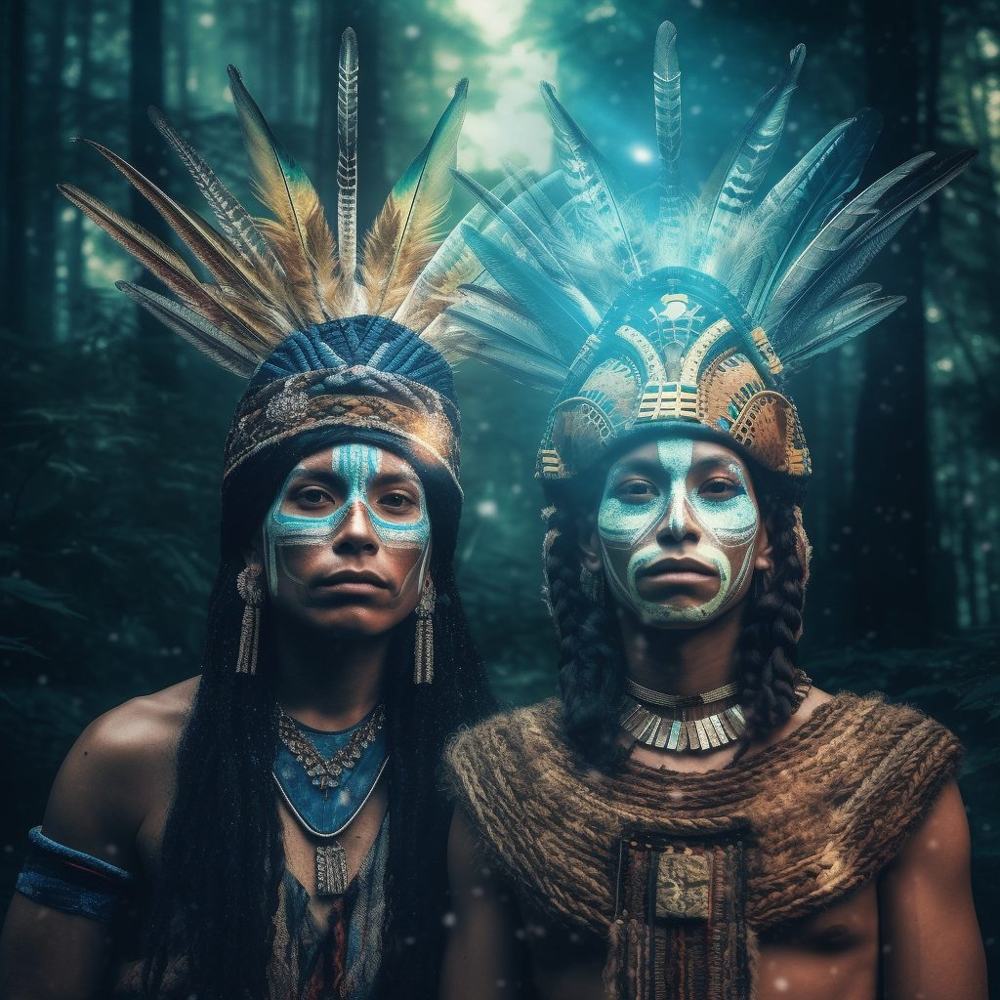
- Nhenety Kariri-Xocó: A South American Indigenous god and a South American Indigenous goddess wearing headdresses made of light rays with the backdrop of a forest with the stars at night.
- Osvaldo Guineo (Mapuche-Williche): Casa de madera con paneles solares. Árboles nativos del sur de Chile. Un río, un hombre moreno indígena, con tes morena y cabello largo hasta la mitad de la espalda. Con un celular en la mano, un jardín de rosas y gladiolos, un gato negro. El hombre de ropa azul y negra. El hombre como primer plano.
- Tadeu Kaingang: Daytime. A family of 5 South Americans Kaingang Indigenous people reforesting a clearing in a forest. Many animals in the forest, including birds, mammals, and insects. Above there are various ancestral nature gods watching the family.
- Wera Moru Tupi Guarani: In the foreground, the side view of an elevated road along which 3 Brazilian Tupi Guarani Indigenous people walk. In the background, in perspective, a city of tall buildings suspended in the middle of the jungle, nature preserved. Happiness.
Fase 2 (2024): IndigenIA
Em março de 2024, em Leeds (Reino Unido), o projeto criou a IndigenIA, uma ferramenta própria de geração de imagens baseada em Stable Diffusion, instalada num laptop chamado Dragão e acessada à distância. Com ela, cada participante treina o seu próprio modelo e cria imagens mais próximas das realidades e estéticas indígenas que quer representar.
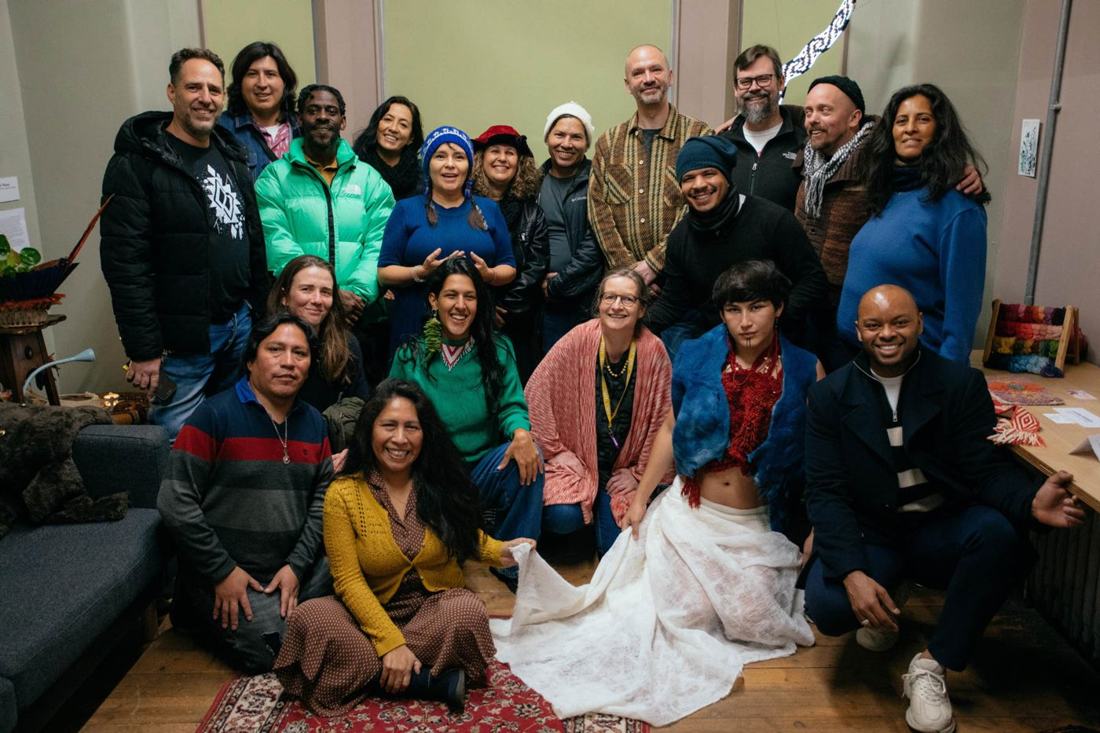
Participaram Azul (Mapuche), Kuenan Tikuna, Loreto Millalén (Mapuche), Mariela Tulián, Tadeu dos Santos Kaingang e Sheilla Souza (Coletivo Kókir), Alex Potiguara e Laryssa Machada, com o coletivo britânico de artistas-tecnólogos Immersive Networks (Dave Lynch, Sam Hallas e Christophe de Bézenac).
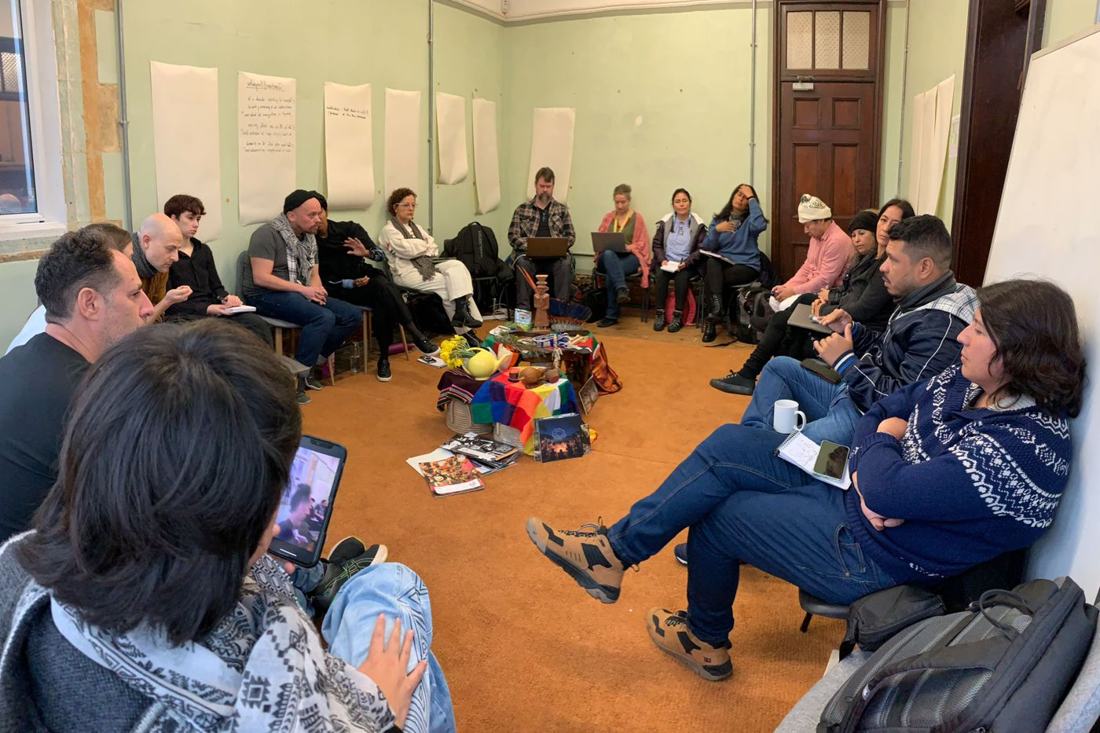
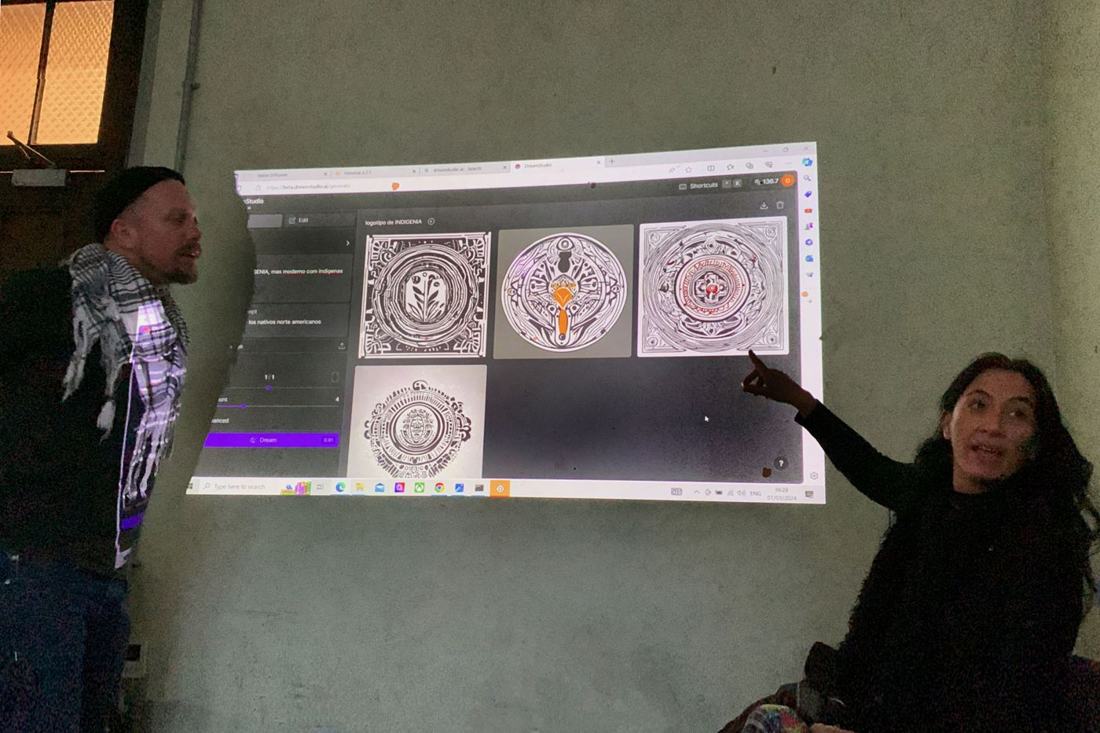
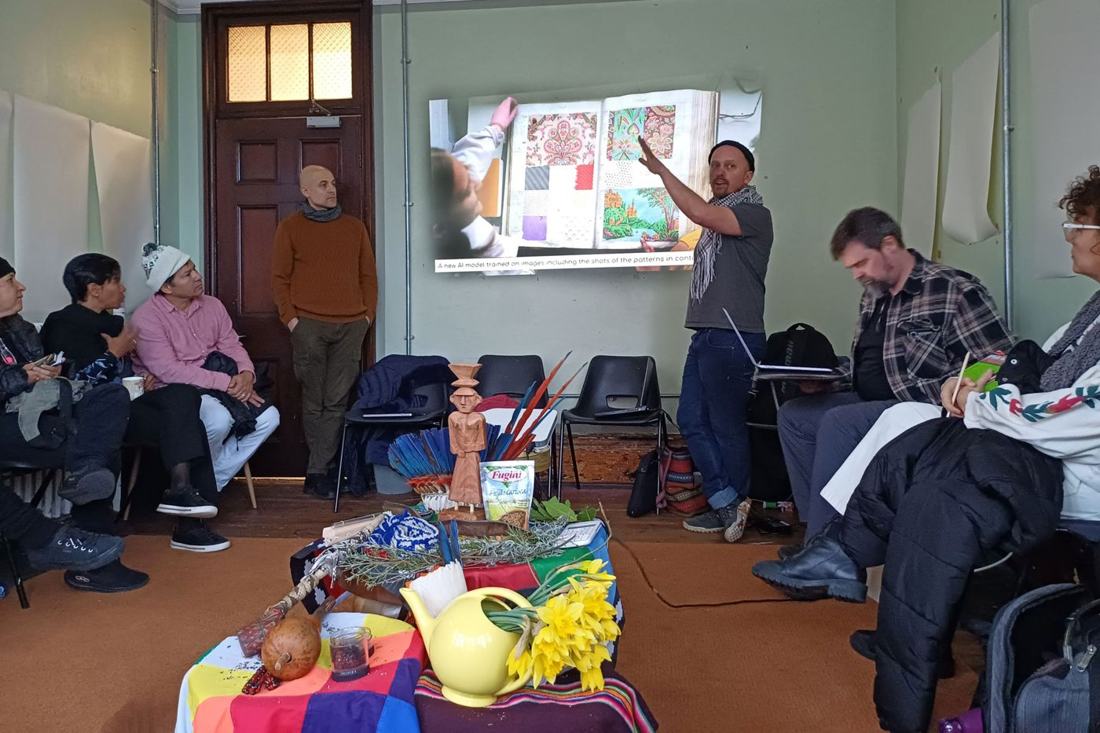
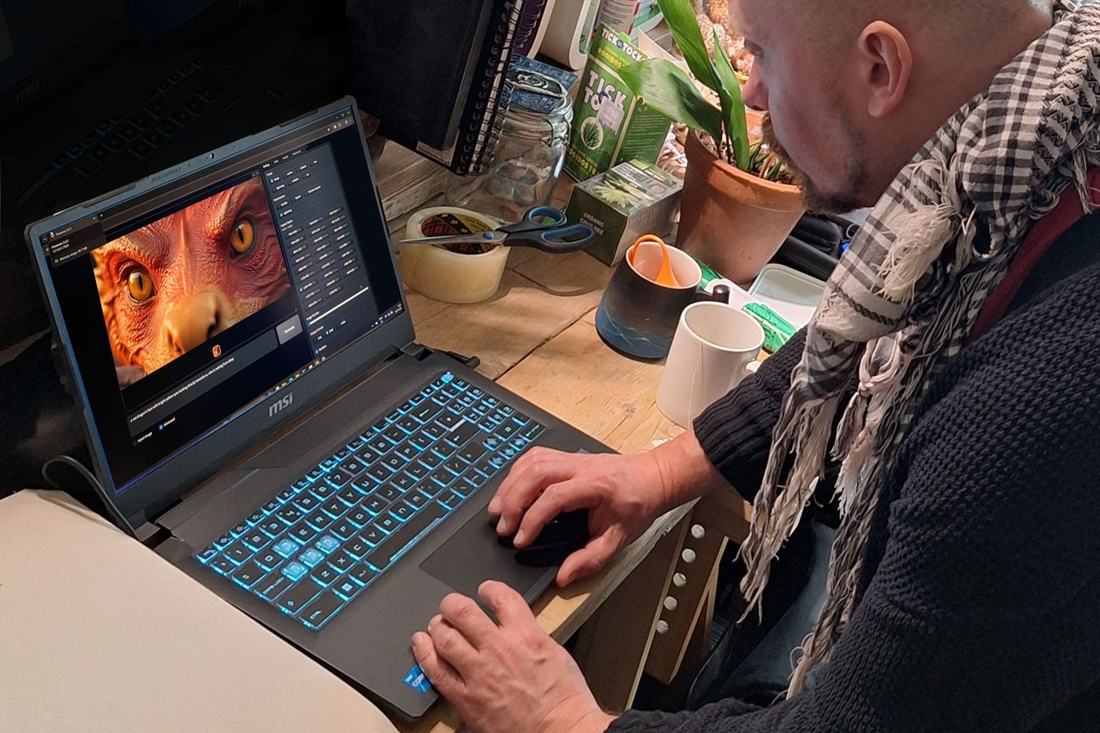
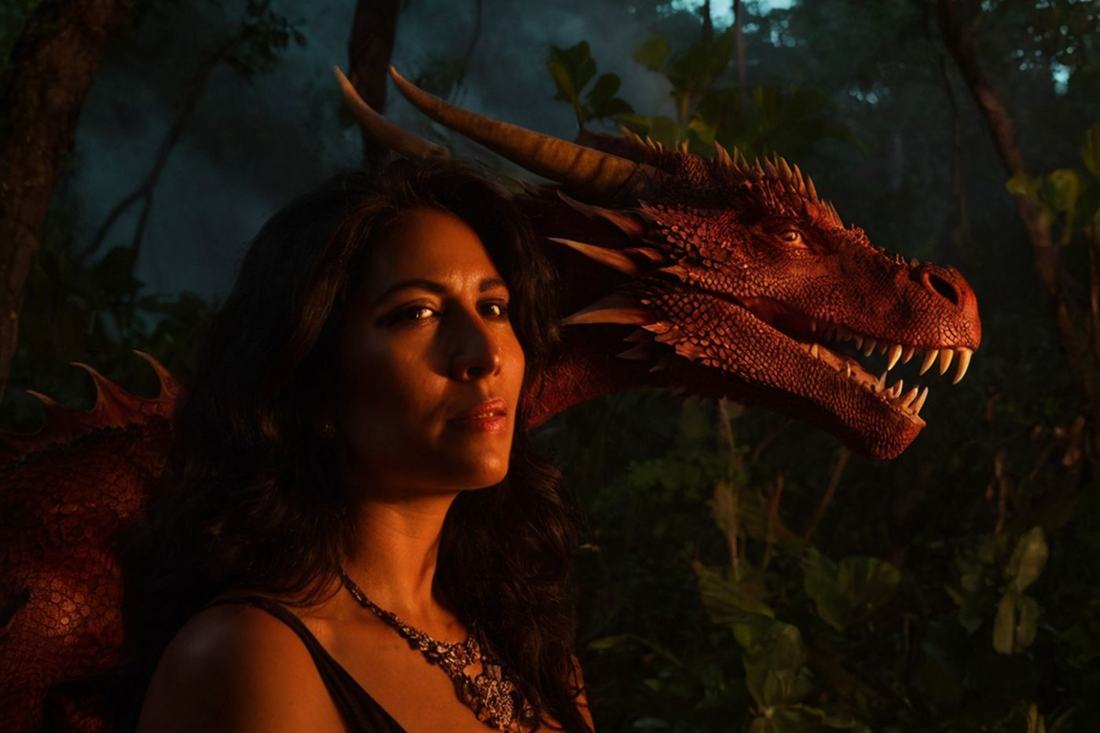
Relatórios da oficina: Alex Potiguara (PDF) e aruma (PDF).
Exposições e publicação
- Exposição coletiva Ficciones Generativas, Galería Gabriela Mistral, Santiago do Chile, de 11 de junho a 13 de julho de 2024.
- Dia de portas abertas “Be Curious”, Universidade de Leeds, 18 de maio de 2024.
- Exposição no Jardim Botânico de Dublin, novembro de 2024.
- Livro coletivo Inteligência Artificial, Arte e Indigeneidade: Entre Sonhos e Alucinações, previsto pela University of London Press para 2026.
Equipe
Participantes da fase 1: Aymar Ccopacatty (Aymara), Ayra Ymboré, Azul (Mapuche), Kuenan Tikuna, Hangorroy Ymboré, Haylly Zamora (Wichi e Kari’ña), Hemerson Pataxó Hãhãhãe, Horacio Montes de Oca Ayala, Kadu Tapuya, Loreto Millalén (Mapuche), Lucián de Silenttio (Aimara), Luz Julieta Altina Tulián e Mariela Tulián (Comechingón Sanavirón Tulián), Nhenety Kariri-Xocó, Osvaldo Guineo (Mapuche-Williche), Tadeu Kaingang e Wera Moru Tupi Guarani.
Coordenação: Sebastián Gerlic (Thydêwá), Profa. Dra. Thea Pitman e Dr. Tom Jackson (University of Leeds), Dr. Andreas Rauh (Dublin City University) e a artista boliviana aruma (Sandra de Berduccy, Universidade Finis Terrae, Chile). Colaboram também o Dr. Alexsandro Cosmo de Mesquita – Alex Potiguara (Universidade de Sheffield) e a Dra. Alessandra Mello Simões Paiva (Universidade Federal do Sul da Bahia).
Apoio
Fundo para Pesquisa Interdisciplinar e Impacto Social da Cultura do Instituto de Pesquisa em Artes e Humanidades da Universidade de Leeds (fase 1) e Enhancing Research Culture Fund da Universidade de Leeds (fase 2).
Visite o site do projeto (em português, inglês e espanhol).